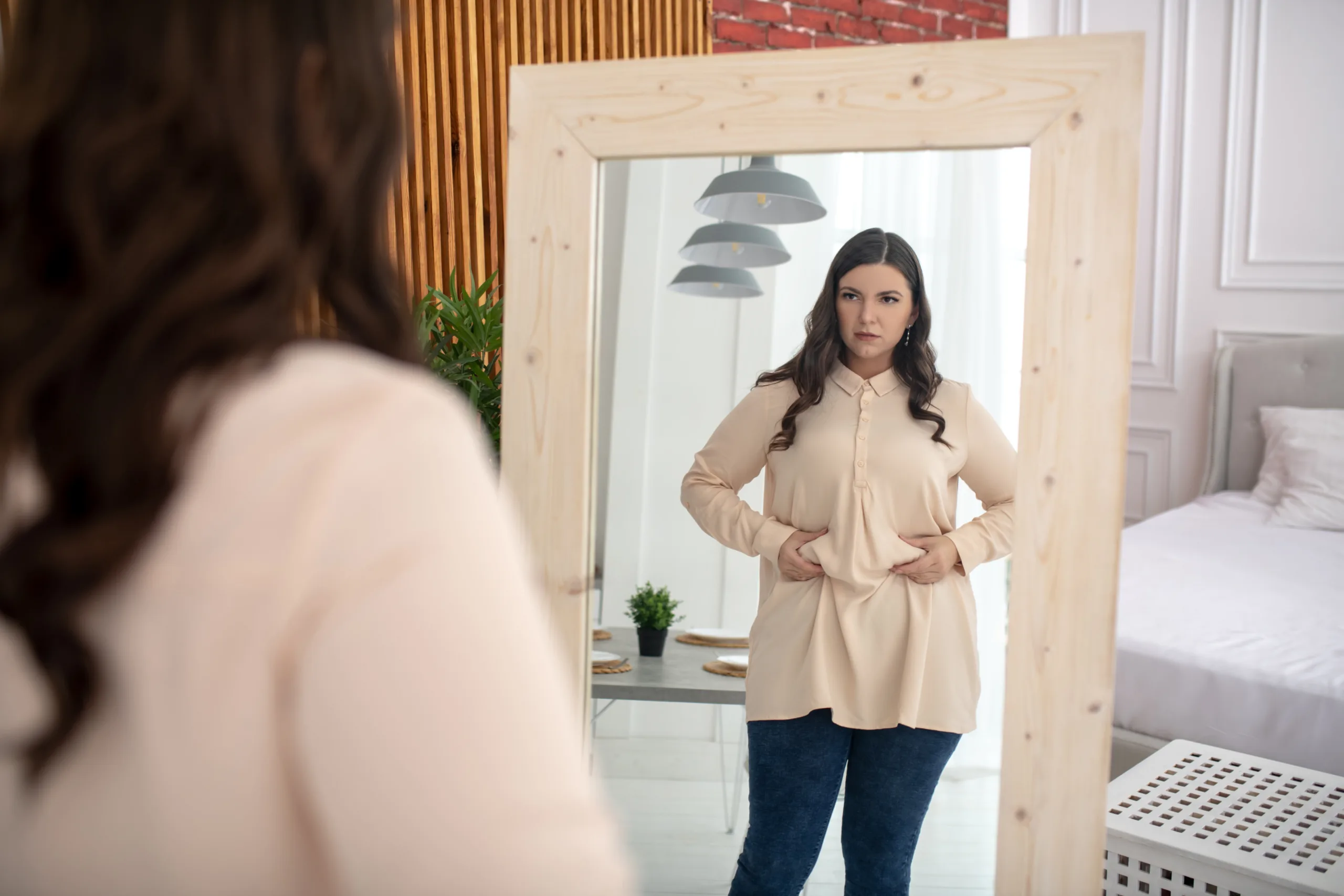
There comes a time in everyone’s recovery journey when it becomes a little more obvious that your clothes are starting to look different on you. They may fit a little more snugly than they use to, or you might just notice they look different on your healthy body. While this is completely normal and something that everyone experiences during recovery, it can still feel uncomfortable and maybe even unwanted when it starts happening for you.
And in a culture that takes such critical notice of any physical changes, you might start feeling highly vulnerable when your clothes begin to feel or look different. What’s important is to work on the mindset that worth and value do not come from how you look, and that your physical health is more important than the way some articles of clothing look on your recovering and resilient body.
Why is it nerve wracking to feel your clothing fit differently?
Clothing is much more than just a practical necessity – it is often a powerful extension of our identity. Our choice of clothing often reflects who we are, or who we want to be. It communicates aspects of our personality, such as whether we prefer to stand out or blend in, and can reflect our cultural ties, social status or personal tastes. The idea of “dressing to express” is a testament to how deeply clothing is tied to our identity.
Beyond identity, clothing is closely connected to body perception. The way we view our own bodies is often influenced by how clothes fit us. When certain clothes flatter our bodies or match how we wish to present ourselves, they can boost our confidence and comfort. On the other hand, clothes that feel too tight, too loose or unflattering can highlight insecurities, affecting our self-esteem and how we perceive our bodies.
This relationship between clothing, identity and body perception becomes especially significant in the context of eating disorder recovery. When you’re in recovery, changes in body size or shape can be a critical part of the healing process. However, when you start noticing your clothing fits differently than it used to, it can trigger fear, uncertainty or vulnerability for several reasons.
First, most of us have a pretty significant fear of change. As you recover from an eating disorder, your body may naturally change as it recovers and finds balance. This can be a scary process for someone who is used to controlling their body size to feel safe or accepted. When clothes start fitting differently, it is a visible indication of that change, which can be frightening.
Then, when your clothes start fitting differently, it can lead to feeling less secure in your identity. Many people with eating disorders have intertwined their sense of self-worth and identity with their body size. A change in how clothes fit may feel like a change in identity, challenging the sense of who they are or who they believe they should be.
Of course, vulnerability often comes from fearing judgment. Society often places value on body size, and while recovering from an eating disorder, you likely have felt fear of stigma or criticism if you perceive yourself not meeting a certain ideal. Clothing that no longer fits the same is a tangible reminder of these fears, which can trigger that sense of vulnerability.
How does recovery help during this process?
Recovery from an eating disorder involves a significant shift in both your mindset and behavior, as you know. One of the core aspects of this process is learning to notice and accept the changes happening in your body without judgement: a hard ask considering the nature of eating disorders. But with the right recovery program, you can learn to accept those changes and also be given the guidance needed when your confidence begins to slip.
Adapting to body changes involves cultivating patience and compassion towards yourself. During recovery, it’s important to understand that the body will go through changes as it seeks to heal from the physical and nutritional deficits caused by the disorder. This healing process is essential for restoring and improving overall health, but it’s undeniably stressful. Developing the ability to tolerate these changes means acknowledging that they are necessary steps towards a healthier, more stable life.
Recovery also encourages a shift in focus from external appearance to internal well-being. This includes prioritizing nutritional health, mental stability, emotional regulation and the body’s functional capabilities, all of which can be navigated with a good therapist. By focusing on the body’s overall health, you can learn to appreciate your body for its strength and function rather than judging it solely based on appearance. This broader perspective can help reduce anxiety about changes in body size or shape, helping to foster a more balanced and realistic understanding of health.
Moreover, recovery involves building a supportive environment that reinforces positive body image and self-care. Surrounding yourself with a group of understanding friends, family and professionals can provide encouragement and reassurance. Engaging with communities that promote body positivity and diversity can also help with ingraining the belief that health and beauty come in many shapes and sizes.
To get started on your recovery journey
Whether you are in the midst of recovery and need some additional support, or are wanting to begin the process of recovery, Seeds of Hope is here to help.