
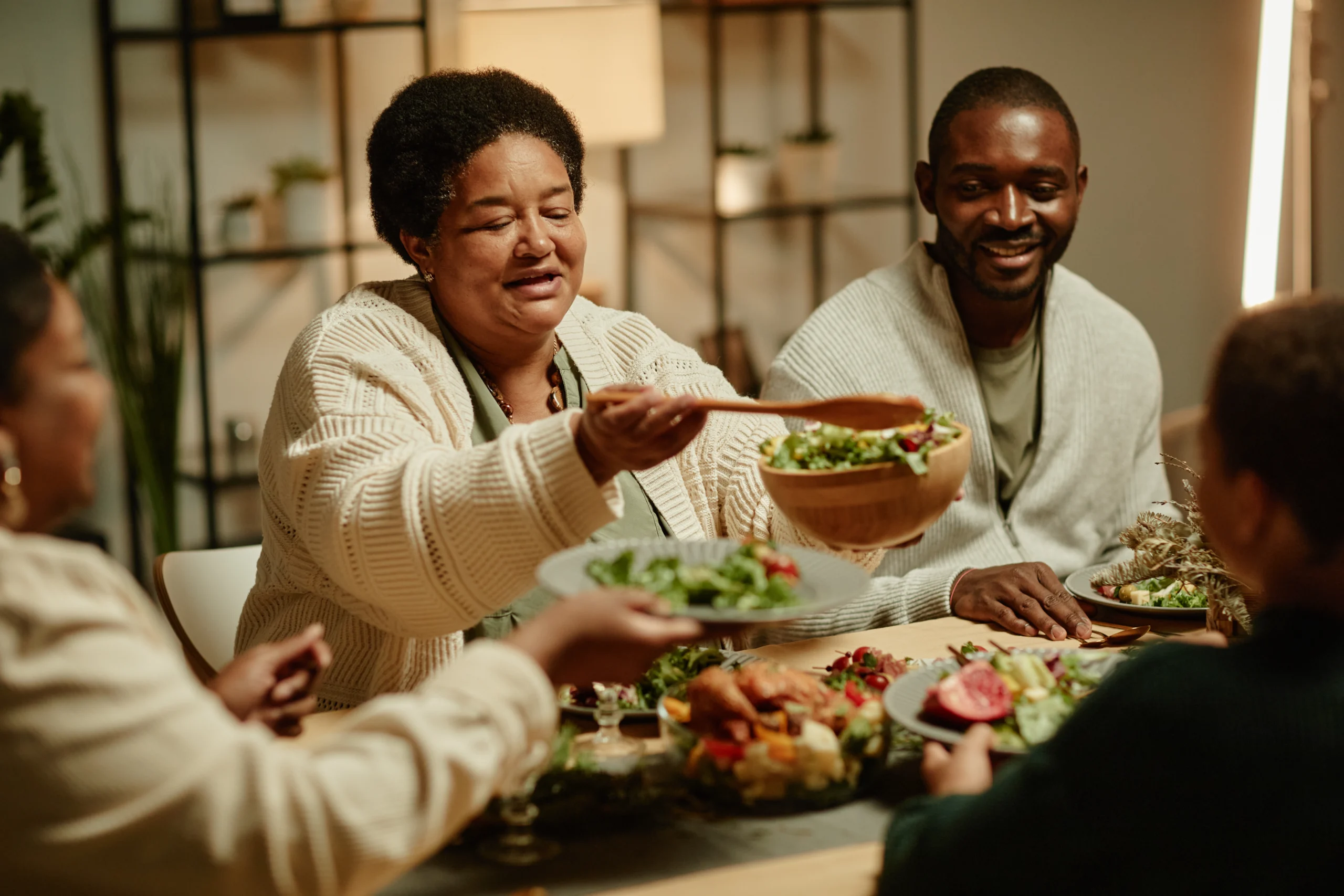
We live in a culture where eating in a group of people is not abnormal – company lunches, dinners with donors, meals before or after an event, parties, etc. All of these are common situations that many Americans encounter on a weekly basis. And for many people, it is something enjoyed and anticipated.
For those struggling with an eating disorder, eating in a group of people can feel like a nightmare. With so many other eyes, you might feel watched, judged or otherwise negatively seen based on your eating choices/habits. And when eating is already a challenging task, doing it in front of a group of people can feel that much more nerve-wracking.
Why is eating in a group so stressful?
Recovering from an eating disorder is a significant and often challenging journey. Eating in a group can be particularly stressful for someone in recovery for so many reasons. Consider some of the following.
Self-consciousness over eating
Those with eating disorders often have a lot of self-imposed rules regarding food – they may take small bites, eat small amounts, order specific items, etc. When eating alone, they don’t have to worry about what others think, but when eating in groups, people tend to focus more about what others think of them or their habits. In recovery, you may have rules you need to stick to regarding food which you may feel self-consciousness about.
Fearing judgement
There’s often an underlying fear that others will judge your food choices, portion sizes or eating speed. This concern can be intensified in social settings where people may have different eating habits or opinions about food. You may fear being called out for your differences or fear that comments will be made about things you already feel self-conscious about.
Comparison
Being around others can lead to comparisons with how much or what others are eating. This can make you feel inadequate or cause you to compromise. You might order something you don’t want to eat, something you don’t even like or something that causes you extreme anxiety to eat simply because you want to avoid comparison.
Triggers
Certain foods or conversations around dieting and body image can act as triggers when you’re in recovery. Going to restaurants that serve only fried food, or having to listen to dinnertime chat about the dissatisfaction others have with their body can be a triggering experience.
Pressure
There can be an unspoken, or even made-up pressure you put on yourself to eat in a way that others perceive as “normal.” You may feel like you need to order similarly to the group, eat at the same pace of the group or, in some other way, compromise yourself to meet these perceived expectations. This pressure can make you feel anxious about meeting others’ expectations while staying true to your own pace and comfort level.
Loss of control
Group settings often come with limited control over food choices or preparation, which can be distressing for someone who, as part of a coping mechanism, keeps a controlling grip on food/ingredients.
History
If you have had negative experiences related to eating in groups before, such as being critiqued, embarrassed or teased for your food choices, this can heighten anxiety in similar settings.
Lacking a safe space
Group settings may lack the private, supportive environment that people need to feel secure while eating, especially while still in early stages of the recovery journey. And for those still battling an eating disorder, they can feel very exposed when expected to eat in public.
How does recovery help you overcome the fear of eating in public
As can be understood, the fear of judgment or misconception can make group dinners anxiety inducing. However, the recovery process involves several steps that can empower you to face these fears and build a healthier relationship with food in social environments.
Recovery provides you with coping tools and strategies to manage anxiety via support groups and counseling sessions where you learn how to challenge negative thoughts and beliefs surrounding eating in public. For example, cognitive-behavioral therapy can help undo the fear of being judged by others and replace it with more realistic and positive thoughts, including the reality that most likely no one is paying attention to, or even cares, what food you order. This shift allows you to feel more comfortable and confident when choosing to eat in groups.
Additionally, recovery often includes nutritional education to teach the importance of food and nourishment. By learning how food fuels the body and maintaining a balanced diet, you can start to view eating as a necessary and positive part of life rather than a source of fear. This newfound perspective can significantly reduce the anxiety associated with eating in front of others and gives you the confidence to eat anywhere knowing you’re simply fueling yourself.
Support from therapists, support groups and loved ones also plays a crucial role. Being part of a community that understands and shares similar experiences can make a significant difference. This support helps you feel less alone as you gradually gain the courage to face eating in public, knowing you have a network of people who understand and accept you.
Finally, consider the final critical of gradually exposing yourself to scary situations. With the guidance of healthcare professionals, you can slowly practice eating in public in a controlled and supportive way. This might start with eating with trusted friends or family members and gradually extending to larger groups or unfamiliar settings. Over time, this exposure can reduce fear and build confidence in group dinners.
Interested in treatment?
If you are seeking eating disorder treatment, or simply finding yourself in need of more support at this time, contact Seeds of Hope today.


